


Synergy occurs when two or more components work together to produce a combined effect greater than the sum of their individual effects. In botanical medicine, researchers study whether a plant's many constituents interact in ways that alter its overall activity. [1]
Essential oils are mixtures of naturally occurring aromatic compounds. Their composition varies with the plant species, growing conditions, harvest, and extraction method. [1] [3]

Complex "natural synergy" ultimately dictates the overall biological effectiveness of the final preparation.
How plant compounds work together
Researchers have described several possible ways that compounds in a botanical preparation interact. The effect depends on the specific substances, their concentrations, and the biological system being studied. [1] [3]
- Changing membrane permeability. Some constituents can alter the membranes of microorganisms, potentially changing how other compounds enter or affect the cell. [3]
- Influencing more than one biological target. An oil may contain constituents with different activities. Their combined action can be additive or synergistic. [1]
- Interacting with microbial defenses. Certain essential-oil components have shown antimicrobial activity in laboratory systems, including effects on membranes and biofilms. [2] [4]
Non-standardized (whole) oregano essential oil is the natural choice
Oregano essential oils contain carvacrol as a major component, alongside other naturally occurring compounds. The proportions differ between oregano species and individual oil samples. Carvacrol has well-documented biological activity in laboratory research; however minor constituents have an important synergistic role to play in the behavior of a essential oil or mixture. [3] [4]
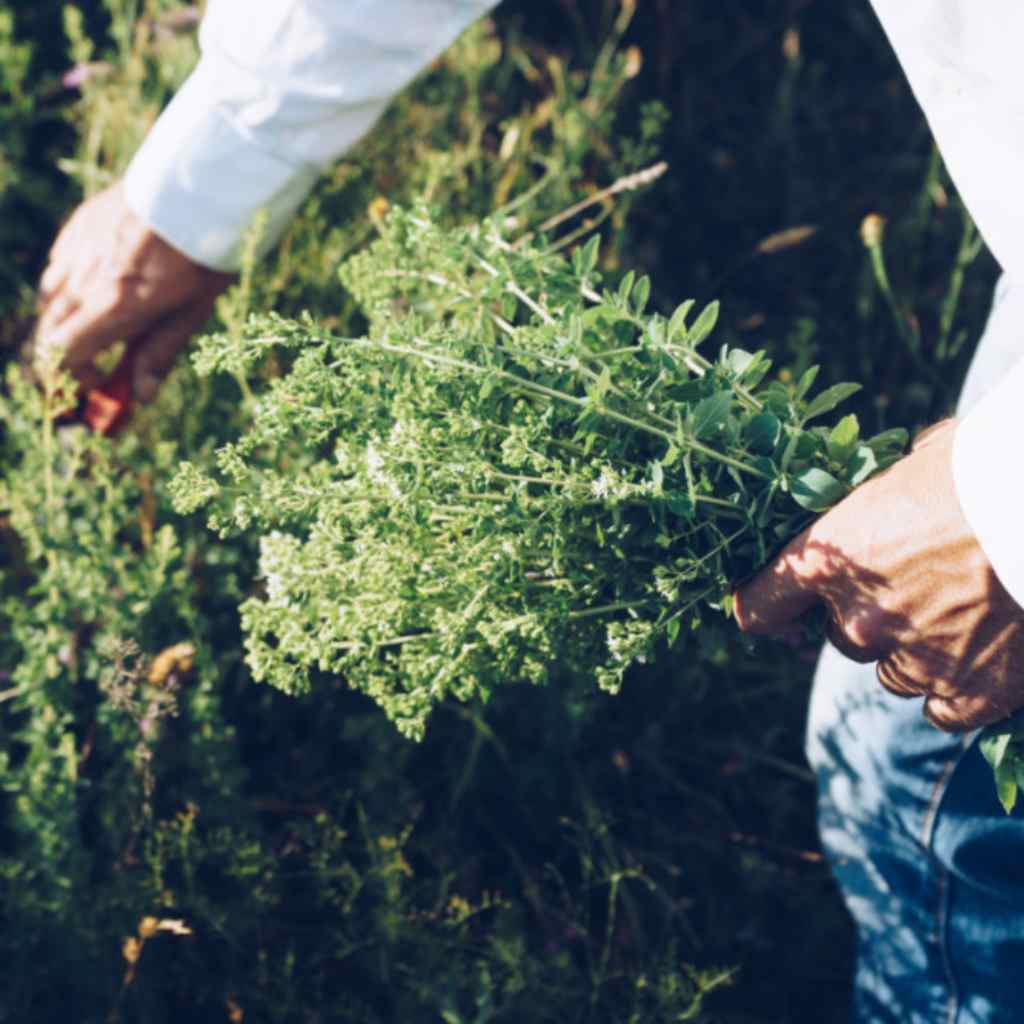
A wild-grown, non-standardized oregano should have dozens of components, with carvacrol dominating.
This distinct synergistic profile has been clearly documented within wild oregano species. Research evaluating the endemic species Origanum minutiflorum shows that while its major active compound is carvacrol (around 81.5%), its therapeutic power against stubborn pathogens and complex biofilms relies heavily on its multi-component natural footprint, working in tandem.[2]
Standardizing oregano essential oil
Standardizing essential oil to a specified concentration of a single compound, like carvacrol, is done for multiple reasons. This practice alters what the natural plant composition and is disruptive to synergy.
To identify standardized oregano essential oil, look for the terms "standardized" on the label or look to marketing materials that indicate a certain percentage might be guaranteed year-over-year (i.e. 85+% carvacrol or "minimum" 86%).
Our approach to oregano essential oil
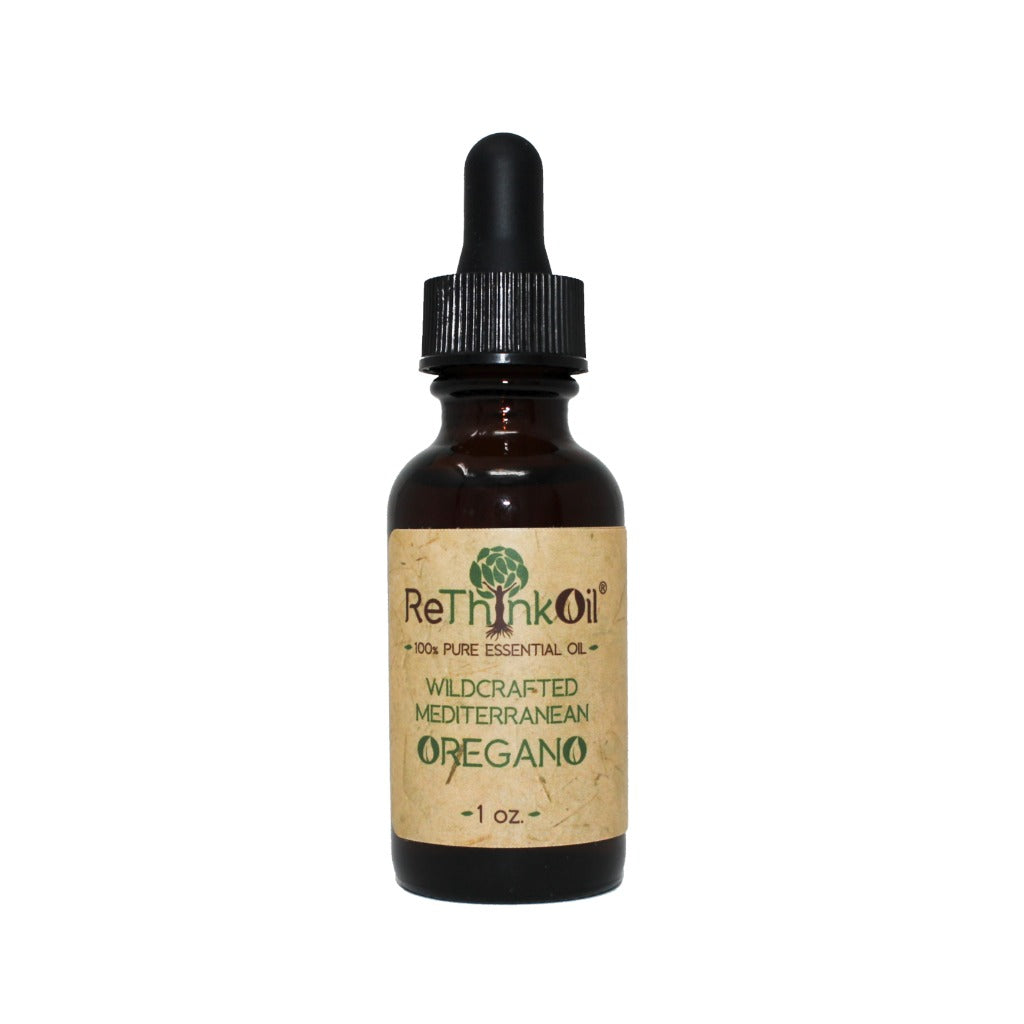
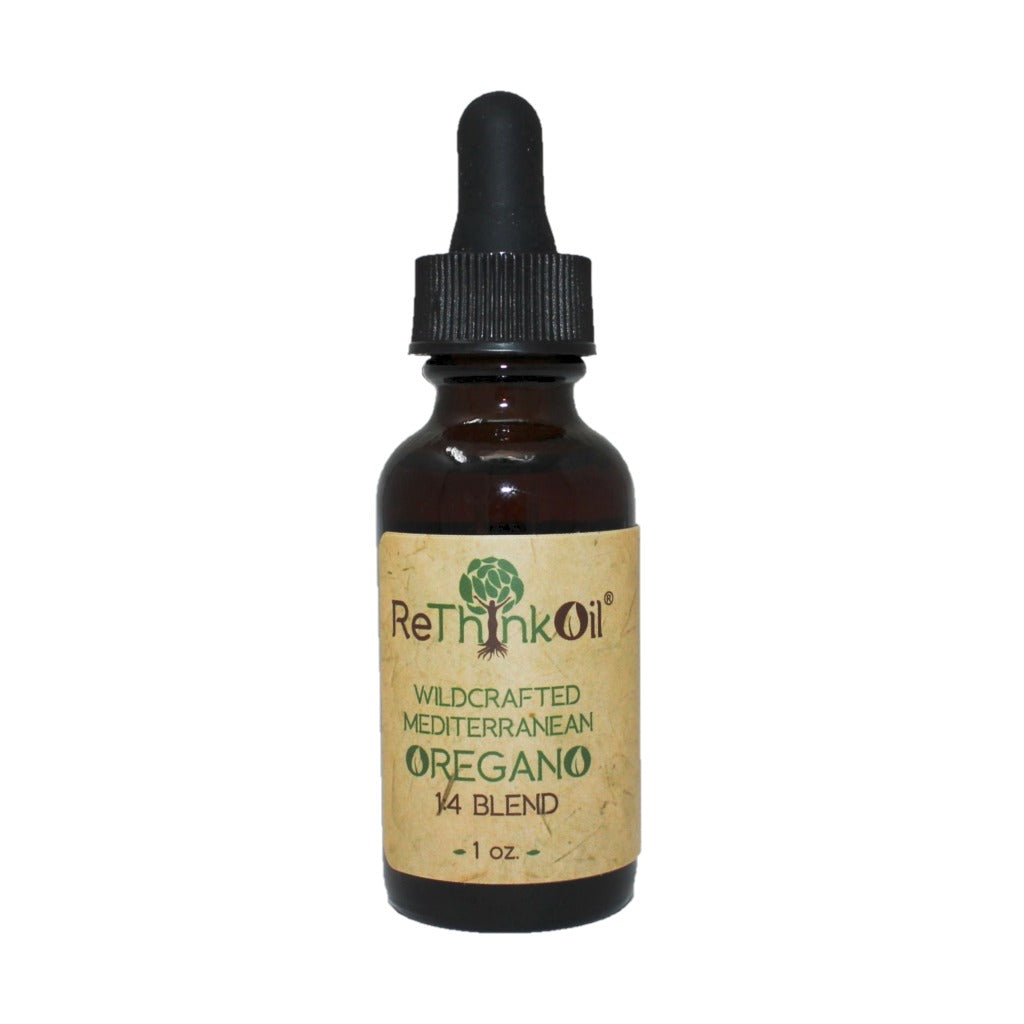
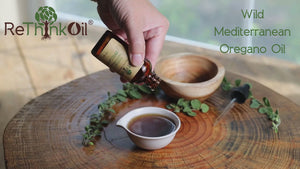
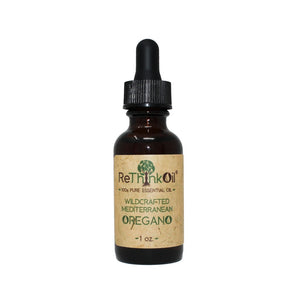
ReThinkOil offers pure, wild Mediterranean oregano essential oil in its whole form. We favor retaining the naturally occurring spectrum of constituents rather than standardizing the oil to a single target carvacrol percentage. Our selection of O. minutiflorum fits this approach perfectly.
Safety note: Essential oils are concentrated substances. They can irritate skin and mucous membranes and may cause harm if used improperly. Always dilute essential oil before using.
Scientific references
- Williamson, E. M. (2001). Synergy and other interactions in phytomedicines. Phytomedicine, 8(5), 401–409. Original publication.
- Kostić, M., Ivanov, M., Marković, T., et al. (2022). An in vitro study of the Origanum minutiflorum O. Schwarz & P. H. Davis and Coriandrum sativum L. essential oils as chronic tonsillitis therapeutics: antibacterial, antibiofilm, antioxidant, and cytotoxic activities. Journal of Essential Oil Research, 34(6), 533–543. Original study.
- Leyva-López, N., Gutiérrez-Grijalva, E. P., Vazquez-Olivo, G., & Heredia, J. B. (2017). Essential oils of oregano: Biological activity beyond their antimicrobial properties. Molecules, 22(6), 989. Open-access review.
- Başer, K. H. C. (2008). Biological and pharmacological activities of carvacrol and carvacrol-bearing essential oils. Current Pharmaceutical Design, 14(29), 3106–3119. Original publication.